Editor’s update — October 2026: The original 2019 version of this article used the old 100-air-mile short-haul limit and linked retired LimoLogs and Pocket Fleet Manager pages. Those are not reliable instructions for a current ELD decision. Use the FMCSA ELD overview and current Hours-of-Service rules for your operation.
First ask: does this driver need a record of duty status?
An electronic logging device (ELD) records a driver’s Hours-of-Service duty status under FMCSA’s technical rules. Federal ELD requirements generally apply when a commercial driver must prepare a record of duty status (RODS), unless an ELD exception fits. A digital timecard or an app that stores logs is not automatically an ELD.
For a qualifying short-haul driver, FMCSA allows time records instead of the usual RODS. The current short-haul conditions include a 150-air-mile radius from the normal reporting location and return and release there within 14 consecutive hours. The carrier must still keep the required time records, and the driver remains subject to applicable driving and on-duty limits. Check FMCSA’s current HOS summary; passenger and property limits differ.
Then check the separate ELD exceptions
FMCSA also lists exceptions for drivers who need paper RODS no more than eight days in any 30-day period, certain driveaway-towaway work, and certain pre-2000 vehicles. These are alternative exceptions, not conditions every driver must meet. Verify the facts for the driver and vehicle; do not assume that most-local work, an older vehicle, or a particular app settles the question.
If an ELD is needed, check FMCSA’s live registered ELD list and revoked ELD list, and confirm the device and installation fit your vehicles and workflow. A listing is not a substitute for proper use. Our registered-ELD resource explains that check in more detail.
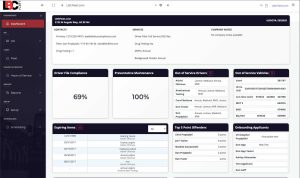
Want to see what LBC offers? The LBC Fleet DOT compliance software overview describes an ELD integration alongside other modules. Ask for a demonstration of current feature availability and compatibility before treating any software page as proof that a particular vehicle or driver is covered.