The fastest way to kill tires is neglect, not bad tires.
Most tire failures don’t come from blowouts. They come from running a tire slightly wrong for a long time.
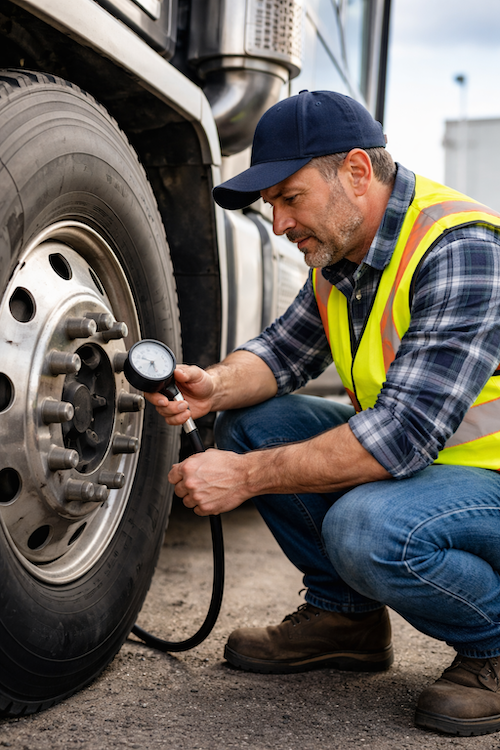
Start with air pressure. Not “looks fine.” Actual pressure.
Underinflation is the quiet killer. It builds heat. Heat destroys casings. Once the casing is compromised, that tire is living on borrowed time, even if the tread looks good.
Next is alignment.
If you’re scrubbing rubber off one edge, you’re not “using the tire.” You’re grinding it away. A bad alignment can wipe out a steer tire faster than any driver mistake.
Then there’s rotation, or lack of it.
Tires wear differently based on position. Leaving them in the same spot because “they still look okay” usually means you’re piling up uneven wear until the tire becomes unusable rather than recyclable.
Driver habits matter more than people want to admit.
Hard cornering, curb checks, riding shoulders, aggressive braking. None of that shows up on a maintenance report, but it absolutely shows up in tire life.
Inspections are where downtime is either prevented or guaranteed.
Catching a nail early is a 20-minute fix. Missing it turns into a road call, a tow, a missed job, and a pissed-off customer.
And finally, tracking matters.
If you don’t know how long a tire has been on a vehicle, where it’s been, or how it’s worn, you’re guessing. Guessing leads to early replacements or late failures. Both cost money.
The goal isn’t squeezing every last mile out of a tire.
The goal is predictable wear, planned replacements, and no surprises on the side of the road.
We’ve broken down fleet maintenance costs in more detail here. Fleet Maintenance Costs