Updated October 2026 to reflect FMCSA’s current roadside policy and the pending rulemaking.
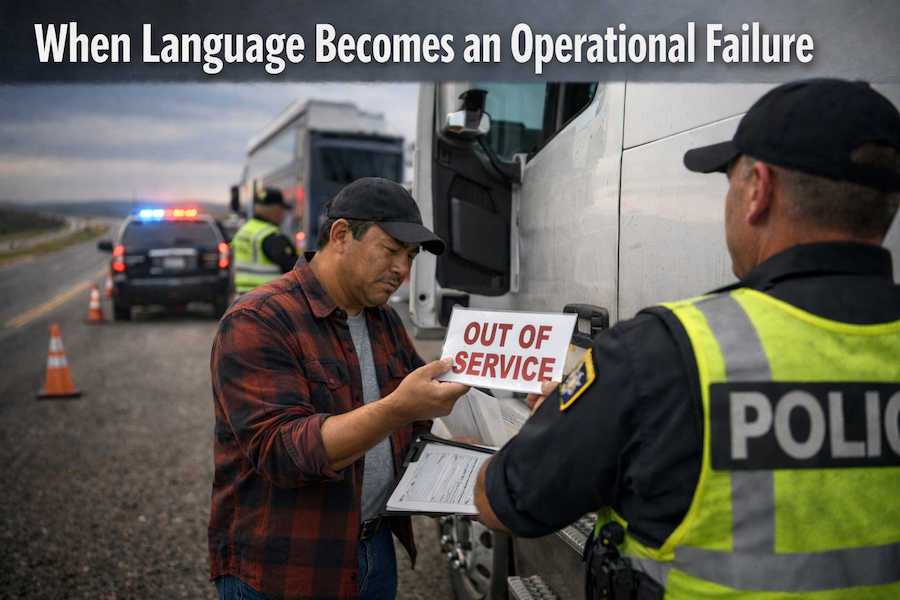
Language can become an operational failure when a carrier sends a driver out without checking the qualifications required for that job. The question is not a driver’s accent, birthplace, or first language. For drivers covered by 49 CFR § 391.11(b)(2), the federal standard is whether the driver can read and speak English sufficiently to converse with the public, understand English highway signs and signals, respond to official inquiries, and make entries on reports and records.
That qualification has been in the regulation for decades. What changed in 2025 was roadside enforcement. Following the April 28, 2025 executive order, the Commercial Vehicle Safety Alliance added noncompliance with § 391.11(b)(2) to its driver out-of-service criteria effective June 25, 2025. FMCSA later revised its inspection policy; the April 16, 2026 policy supersedes the May 2025 memo.
Congress also acted, but the distinction matters. Public Law 119-75, § 131, signed February 3, 2026 directed the Secretary of Transportation to update the regulations so noncompliance triggers an out-of-service order. FMCSA published an August 2026 proposed rule to codify that consequence. A proposal is not a final rule; the existing regulation, current enforcement policy, and CVSA criteria are the basis for today’s roadside handling.
What a carrier should actually do
- Check the rule’s scope. Part 391 applies to covered commercial motor vehicle operations, not just people holding a CDL. It also has specific exceptions. FMCSA’s October 6, 2026 roadside FAQ explains the U.S.-Mexico border commercial-zone trip exception and the treatment of drivers expressly excepted from Part 391.
- Assess the actual job requirement before dispatch. Use the abilities named in § 391.11(b)(2), document your qualification decision, and train dispatch and supervisors on what to escalate. Do not substitute assumptions about nationality or accent for the regulation’s functional standard.
- Respond to an order, not a slogan. A driver out-of-service order restricts that driver; it does not mean the vehicle can never move or that the driver is permanently disqualified. Read the actual inspection report and applicable order, do not dispatch the cited driver in violation of it, and arrange a qualified replacement driver when permitted.
The business risk is real: an unplanned driver removal can interrupt a trip and force dispatch to recover the schedule. But “every driver, every location, forever” is not what FMCSA’s current guidance says. Get the applicability and the actual order right before deciding the next move.
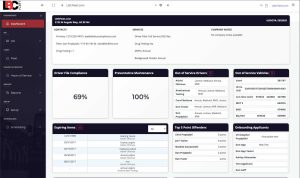
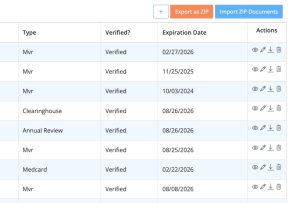
If your team needs help organizing driver-qualification records and a review process, see LBC Fleet’s compliance services. LBC can help with administrative workflow; the carrier remains responsible for its qualification and dispatch decisions.
For broader checklists, official-tool links, and historical sample forms, visit LBC Fleet’s DOT compliance resource hub. Its older PDFs are references; verify current requirements before using one.