
FMCSA Compliance Recovery · Since 2015
DOT Safety Rating Upgrade Services That Push FMCSA to a Decision
A Conditional or Unsatisfactory rating doesn’t fix itself. We review the findings, build the evidence for the appropriate FMCSA request, and follow up while the agency considers it.
Proposed Unsatisfactory? Aim to file within 15 days so FMCSA can decide before prohibitions start.
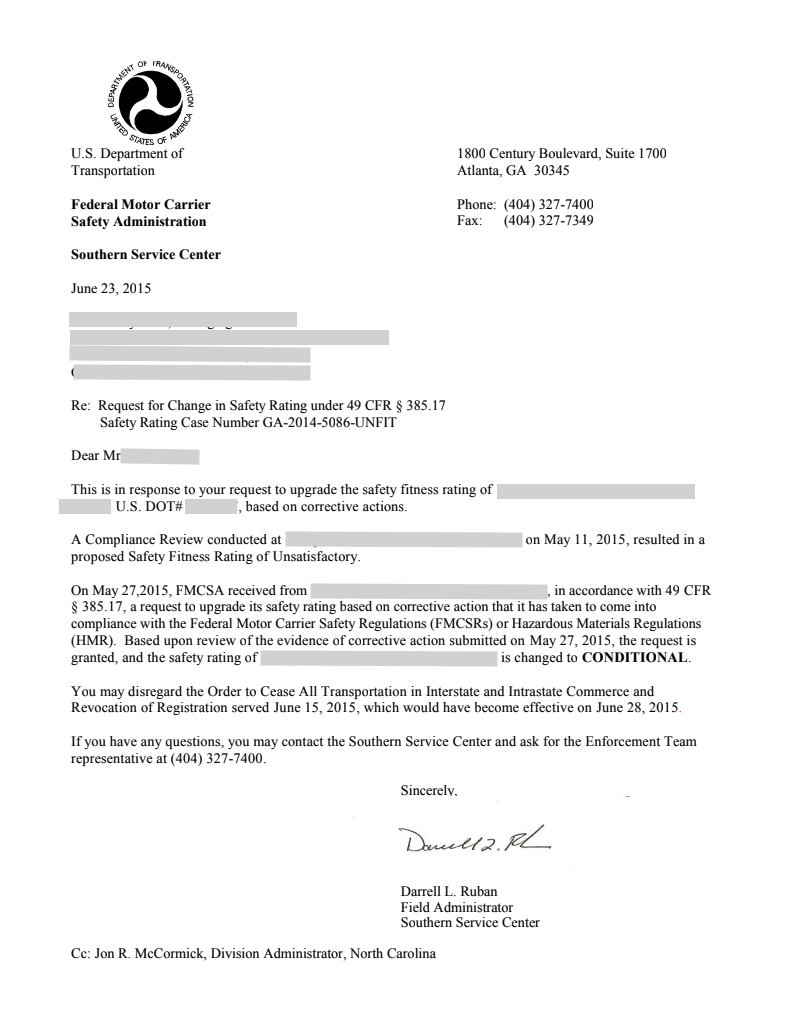
Two real paths
§385.15 or §385.17
Administrative review when FMCSA made an error; corrective-action change when you’ve fixed the deficiencies. We pick the right one for your facts.
What sets us apart
We don’t submit and disappear
After filing, the real work begins. We follow up until an FMCSA analyst actually reviews your plan and rules on it — because your business depends on the decision, not the paperwork.
Built on real audits
Evidence, not assertions
Bare claims that “it’s fixed” get denied. We map each violation to the cited CFR section and build a substantial evidence packet that meets §§385.5 and 385.7.
Who this is for
Clock is running
You just got a proposed Unsatisfactory
The rating becomes final in 45 days (passenger or placardable-hazmat carriers) or 60 days (other carriers), and an operations prohibition follows. The window to act is now, not after a shutdown notice.
Losing loads
You’re Conditional and brokers are backing away
A Conditional rating may matter to a broker or customer evaluating a carrier, but the 2026 Supreme Court ruling did not decide how often that happens or whether it causes lost freight. If a customer has raised the rating, document the concern and review your FMCSA options.
Already denied
Your earlier request was denied
If FMCSA denied an earlier request, start with its stated reason. We can review the findings, address the gaps, and prepare a documented new request.
In this guide
Free tools to check where you stand
Self-assess before you call
- FMCSA Downgrade Rubric — see how factor grades combine into a rating
- Acute & Critical Violations Checklist — what auditors weigh heaviest
- Check your public record on the FMCSA SAFER Company Snapshot
Already have a notice in hand? DOT audit preparation services may be the faster route if your review isn’t final yet.
Why carriers choose LBC Fleet for a DOT safety rating upgrade
A safety-rating response is not a template. We review the specific findings, choose the applicable regulatory path, document corrective actions, and follow up on the filing. FMCSA makes the rating decision.
- Custom corrective action plans — never one-size-fits-all templates
- Each violation mapped to the specific cited CFR requirement
- Substantial evidence packets that demonstrate sustained compliance
- Filed to the correct FMCSA Service Center for your region
- We keep pushing until an analyst reviews and decides
Our upgrade requests are built around the actual compliance-review findings. Each proposed correction should point to the cited requirement and the records showing what changed.
Our approach
We fight to get your plan reviewed
Submitting the request is one step. We track the filing, follow up with FMCSA, and keep you informed while the agency considers it.
Proactive carriers use our mock DOT audit services to catch the deficiencies that cause a downgrade before an investigator ever does.
What a safety rating is and when it’s assigned
FMCSA issues Satisfactory, Conditional, or Unsatisfactory ratings after a rated compliance review. Ratings follow the method in 49 CFR Part 385, Appendix B.
Investigators grade separate factors — each examining a specific regulatory area — then combine those factor grades into the overall company rating. Understanding which factor failed is the first step to fixing it.
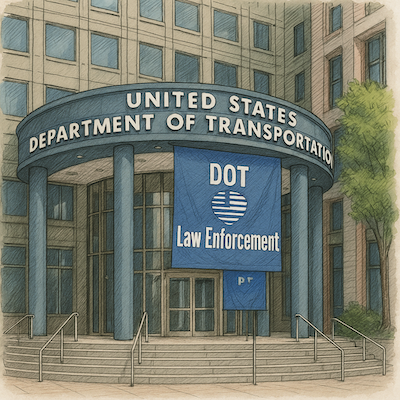
What can cause a downgrade during an audit
One factor rated Unsatisfactory often moves your overall rating to Conditional. Two or more factors rated Unsatisfactory almost always produce an Unsatisfactory company rating. High vehicle out-of-service rates (around 34% or higher) and high recordable-accident rates can also push a factor over the line.
The factors investigators grade
- Driver qualifications
- Vehicle condition and inspections
- Hours of Service
- Controlled substances and alcohol testing
- Accident history
- Overall safety management controls
Acute vs. critical violations
Acute violations are serious one-time failures — no drug-and-alcohol testing program under Part 382, or putting a driver with a suspended CDL behind the wheel. Critical violations are patterns showing weak controls (often 10%+ of records checked) — repeated HOS limit breaks, or recurring vehicles without annual inspections under Part 396.
Driver-qualification findings are among the most common downgrade triggers. Our outsourced DQ file management closes that gap before it becomes a factor grade.
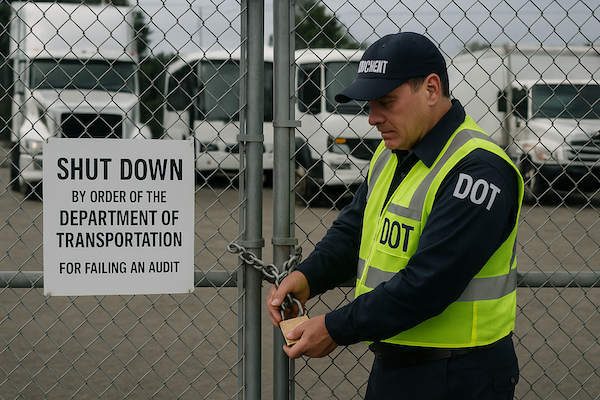
Your two paths to challenge or change a rating
Path 1
Administrative review — §385.15
- Use when you believe FMCSA made a factual or procedural error
- File within 90 days of the proposed or final rating
- With a proposed Unsatisfactory, file within 15 days so FMCSA can try to decide before prohibitions start
Governed by 49 CFR 385.15.
Path 2
Change based on corrective actions — §385.17
- Submit a written request after implementing corrective actions that meet §385.5 and §385.7
- Include a clear Safety Management Plan and proof your controls work
- Unsatisfactory: FMCSA reviews within 30 days (passenger or placardable-hazmat carriers) or 45 days (other carriers)
- Conditional: no review deadline in the rule — the rating stays until changed
Governed by 49 CFR 385.17.
What your corrective action plan must include
Per 49 CFR 385.17, your request must include a written description of the corrective actions taken and documentation proving you currently meet the safety standard and factors in §385.5 and §385.7. We file to the correct Service Center for your region per 49 CFR 390.27.
What we build into the packet
- Root-cause analysis for each finding
- Updated policies and procedures mapped to the cited CFR sections
- Training and verification records with dates and responsible roles
- Monitoring controls and internal audits
- Evidence packets: DQ files, maintenance records, HOS controls, testing-program records, accident register

Why a downgrade hurts more than it used to
An Unsatisfactory rating can lead to an operations prohibition under the applicable FMCSA deadline. A Conditional rating can raise questions from customers or insurers, but its commercial effects depend on their individual decisions; the 2026 Supreme Court ruling did not measure those effects.
In Montgomery v. Caribe Transport II, LLC, decided May 14, 2026, the Supreme Court held that the federal transportation statute does not preempt the type of state negligent-hiring claim brought against a freight broker. The opinion recounts the plaintiff’s allegation that the carrier had a Conditional rating, but the Court did not decide whether the broker was negligent. The case was sent back for further proceedings. Read the Court’s opinion.
We unpack the ruling and what it means for carriers in our breakdown of our separate analysis of the broker-liability ruling. If you’re losing freight right now, see a separate discussion of loads and Conditional ratings and how to keep loads moving while you upgrade.
Common issues we fix
- Higher insurance premiums tied to the rating
- Brokers restricting or refusing Conditional carriers
- The 45/60-day clock before an Unsatisfactory becomes final
- Government and large-shipper contracts that exclude Conditional carriers
Transparent pricing
- $150 per hour for expert FMCSA safety rating upgrade consulting
- $2,000 retainer to begin work on your corrective action plan
- Nationwide service across all 50 states
- No hidden fees — you know exactly what you’re investing
The retainer lets us start immediately on a time-sensitive upgrade. Every case has unique variables — violation types, evidence complexity, and what each FMCSA office expects — so we scope honestly rather than quoting a flat bargain price.
Before committing, ask what the quoted scope includes, what records you will need to provide, and how follow-up with FMCSA will be handled.
What’s included
- Complete analysis of your compliance-review findings
- Custom corrective action plan mapped to 49 CFR requirements
- Evidence packet preparation and documentation
- Submission to the correct FMCSA Service Center per §390.27
- Follow-up correspondence with FMCSA analysts
- Ongoing support until the upgrade decision
How the upgrade works
Step 1
Review & root-cause
We read your compliance-review findings line by line and trace each violation to its root cause — the difference between a real fix and a cosmetic one.
Step 2
Build the evidence
We construct the corrective action plan and Safety Management Plan, mapped to the cited CFR sections, with the documentation that proves the controls work.
Step 3
File & push to a decision
We submit to the correct Service Center and follow up until an analyst reviews it and rules — then help you hold the rating going forward.
Talk through your findings, get an honest timeline, and see exactly what your corrective action plan needs.
Frequently asked questions
Is FMCSA required to review my upgrade quickly?
Only for Unsatisfactory ratings. Under §385.17, FMCSA reviews within 30 days for passenger or placardable-hazmat carriers and 45 days for others. For Conditional ratings, there is no review deadline — which is exactly why pushing the request matters.
When does a proposed rating become final?
After 45 days for passenger or placardable-hazmat carriers and 60 days for others, unless you successfully act within the window.
Can I operate with a Conditional rating?
A Conditional rating is not the same as a proposed or final Unsatisfactory rating. Check any separate restriction that applies to your carrier. For a proposed Unsatisfactory rating, act on the deadlines in your FMCSA notice. Under 49 CFR 385.17(g), FMCSA may allow up to 60 additional days beyond the 60-day period only for a carrier that does not transport passengers or placardable hazardous materials, and only if FMCSA determines the carrier is making a good-faith effort to improve. That extension is not automatic.
Can I still get loads with a Conditional rating?
Possibly. A Conditional rating does not by itself prohibit operations, but customers and brokers may use their own carrier-selection criteria. The Supreme Court’s 2026 Montgomery decision allowed a negligent-hiring claim against a freight broker to proceed past a federal-preemption defense; it did not decide liability or establish that brokers have stopped using all Conditional-rated carriers. Ask the customer about its criteria, review your FMCSA findings, and consider the appropriate review or corrective-action route.
How long do I have to submit corrective actions?
There’s no fixed deadline for a §385.17 corrective-action request, but timing is critical. For an Unsatisfactory rating, act before the 45/60-day final date to avoid operational prohibitions. For a Conditional rating, the sooner you file, the sooner the freight and insurance pressure eases.
What makes FMCSA approve or deny an upgrade request?
FMCSA evaluates whether your corrective actions demonstrate that you currently meet the safety standard and factors in §385.5 and §385.7. The deciding factors: substantial evidence (not promises), systematic safety-management controls, root-cause fixes, and documentation showing sustained improvement.
Ready to upgrade your rating?
We handle both the review and the corrective-action route
Bring your compliance-review findings and we’ll tell you which path fits and what the plan needs. Prefer to get ahead of the next audit? Start with DOT audit preparation services or a proactive mock DOT audit.

Related resources
Proactive
Mock DOT audit services
Find and fix the deficiencies that cause a downgrade before FMCSA does.
Notice in hand
DOT audit preparation services
Reactive prep when a compliance review is scheduled or underway.
The ruling
The Montgomery broker-liability ruling
What the Court decided about broker negligent-hiring claims — and what it did not.
Free to download: our DOT compliance resource hub — checklists, DQ file tools, and audit-prep resources.