
Fleet Management for Electrical Companies
DOT compliance, CDL workforce management, multi-license tracking, and Raven dash cameras for electrical operators running bucket trucks, line trucks, and service vans that are over federal weight thresholds from day one.
Fleet management for electrical companies doesn't start with the "are we DOT-regulated?" conversation HVAC operators are having — most electrical fleets are past it. Bucket trucks, line trucks, and aerial lifts operate at CMV weight class as a baseline. The real question is whether the DQ files, FMCSA Clearinghouse queries, hours of service records, and multi-license documentation match what's already happening on the road.
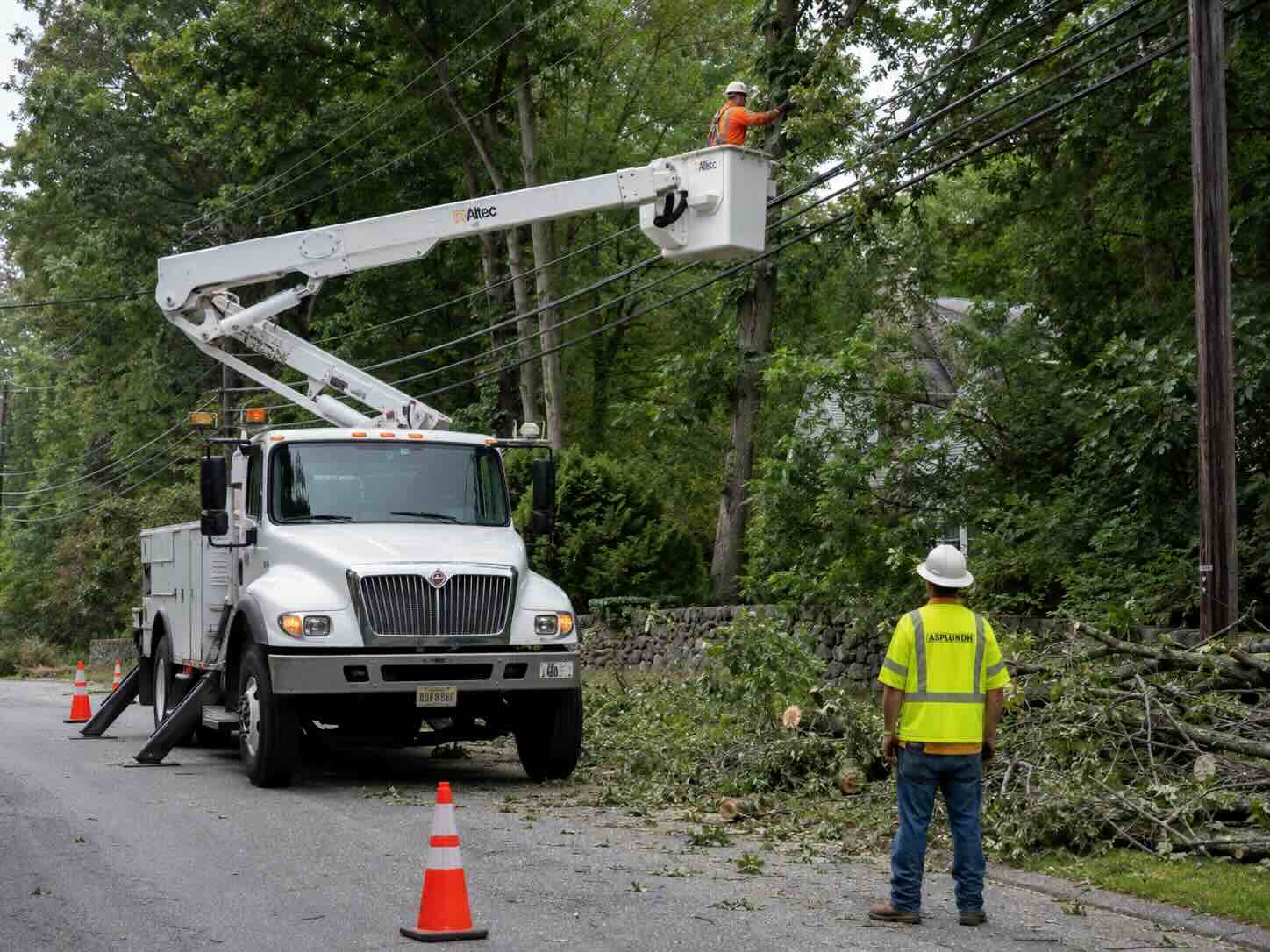
Bucket Trucks Over Thresholds Day One
Line trucks, bucket trucks, aerial lifts, and material-trailer combos operate at CMV weight class as a baseline. Many cross 26,001 lbs combined GVWR routinely — CDL territory. The compliance question isn't whether DOT applies, it's whether your documentation matches.
One File, Every Credential Type
Journeyman, master, low-voltage, solar PV, EV charger installer, fire/life safety, state contractor licensure. LBC's DOT Compliance Software tracks every credential with an expiration date — alerts and renewal workflows built in.
Raven Cameras + GPS Asset Tracking
GPS tracking on service trucks changes the recovery economics for copper and material theft. Raven dash cameras at Raven's advertised prices — zero LBC markup — protect the driver-side claims exposure.
Segments We Work With
Electrical operations span four operational profiles. The DOT compliance and licensing fundamentals are unified — the day-to-day looks different.
Municipal & Public Works
CDL-heavy line work and bucket truck operations. Public-sector procurement scrutinizes compliance posture before contract award — DOT records, drug testing program participation, DQ file completeness. Longer engagement cycles, deeper documentation requirements, regular audit exposure throughout contract term.
New Construction
Project-based mobilization with crews moving between sites. Material trailers behind service trucks easily cross 26,001 lbs combined GVWR when hauling panels, transformers, or wire spools. GC relationships drive scheduling — compliance issues that delay a crew get noticed fast.
Commercial Service
Mix of service vans and occasional bucket trucks running B2B routes. Predictable customer base means better driver behavior data and stronger claims defense when incidents happen. Insurance carriers reward documented dash cam programs and ongoing MVR monitoring.
Residential Service
Service van fleets with technicians dispatched into customer homes. Background screening isn't optional — it's insurance, trust, and legal exposure all at once. Smaller vehicles individually, but the same DOT thresholds apply once upfitted with bin, ladder rack, and material inventory.
DOT Compliance Software
The electrical engagement runs on LBC's own DOT Compliance Software: DQ files, ELD, DVIR, maintenance documentation, and license tracking across every certification type in one platform. FMCSA Clearinghouse queries are handled separately through LBC's managed compliance service.
Why Fleet Management for Electrical Companies Looks Different
Electrical operations don't fit a standard fleet management template. Like the other trades in our fleet management services by industry lineup, the underlying compliance fundamentals are unified — but the operational profile is distinct. The workforce is more credentialed than most trades — multiple license types, often CDL-class drivers — and the vehicles are over federal weight thresholds from day one rather than creeping into them. Generic fleet software covers maybe one of those problems.
- Bucket trucks, line trucks, aerial lifts over threshold day one. No upfit-creep grace period — the fleet is already operating CMV-class. The question is whether the paperwork matches what's already happening on the road.
- Material trailers cross 26,001 lbs combined routinely. Service truck plus loaded trailer hauling new panels, transformers, or wire spools easily clears the combined-weight CDL threshold.
- CDL workforce reality. More electricians hold CDLs than most operators realize. FMCSA Clearinghouse queries are required at hire for any CDL holder — even if they're not currently driving CMV-class.
- Multi-license matrix. Journeyman, master, low-voltage, solar PV, EV charger installer, fire/life safety, state-specific endorsements. Most electrical operators track these across spreadsheets that go stale.
- Customer-facing in residential work. Background screening isn't optional for technicians entering customer homes — it's insurance, trust, and legal exposure stacked together.
- High-value inventory in trucks. Copper, transformers, switchgear, panels — all theft targets. GPS asset tracking changes the recovery economics the first time a loaded truck goes missing.
- Multi-state operations and license reciprocity. Operating across state lines stacks state-specific electrical licensing requirements on top of federal DOT compliance.
- Public-sector contract requirements. Municipal and utility procurement teams audit compliance posture before awarding contracts. A documented program is a competitive differentiator on the bid.
Built around how electrical operations actually run.
Electrical fleets aren't having the "are we DOT-regulated?" conversation HVAC operators are having — they're past it. The question is whether the documentation matches what's already happening on the road. LBC's DOT Compliance Software was built to handle CDL-class workforces with multi-license matrices, and the Fleet Account Manager works underneath it to keep the compliance file current as licenses expire and new techs onboard.
Hardware passes through at Raven's advertised prices. Zero markup. The screening side — background checks and MVR monitoring — runs in parallel. Everything lands in the same compliance file, surfaced through one dashboard.
What Fleet Management for Electrical Companies Actually Includes
- LBC's DOT Compliance Software platform: DQ files, ELD, DVIR, maintenance documentation, and license tracking in one platform. FMCSA Clearinghouse queries are handled through the managed service, not a software integration. Full breakdown under DOT compliance automation software.
- License tracking across every electrical certification type — journeyman, master, low-voltage, solar PV, EV installer, fire/life safety, state contractor licensure. Centralized with expiration alerts and renewal workflows.
- Driver qualification files for every CDL-class driver — built and maintained to FMCSA Part 391 standards. Cornerstone service: outsourced DQ file management.
- FMCSA Clearinghouse queries — pre-hire and annual monitoring for every CDL holder. Required by federal regulation; we handle the workflow.
- Background checks for customer-facing technicians — pre-hire and ongoing. Tied directly to the compliance file. Cornerstone service: background checks.
- MVR monitoring on every driver, not just CDL — feeds directly into insurance carrier renewal pricing. Cornerstone service: MVRs and driving records.
- Raven dash camera program — at Raven's advertised prices (zero LBC markup), installation coordination, driver onboarding, footage retrieval workflow.
- GPS asset tracking — service trucks, trailers, high-value equipment. Recovery economics change dramatically with documented tracking. See telematics.
- Return-to-Duty support for CDL workforce — when a CDL driver fails a test, RTD process navigation gets complicated fast. Return-to-duty testing without employer covers the bridge case.
- Mock DOT audits for electrical operators preparing for procurement scrutiny or just wanting to know where they stand. Cornerstone: mock DOT audit services.
Who This Is For
Three common entry-point patterns for electrical fleet engagements.
The electrical contractor who just got a roadside inspection
Service van or bucket truck pulled over. Officer notices it's CMV-class. FMCSA wants DQ files, drug testing records, and HOS logs. If the driver had a CDL, add Clearinghouse compliance to the list. None of those exist yet. If a notice is in hand, start here →
The electrical operator whose insurance carrier flagged risk
Carrier wants dash cams, ongoing MVR monitoring, or premiums go up at renewal. Most electrical operators don't have a program built — and rolling one in-house takes longer than the renewal window. Carrier-required programs need to be documented, not just deployed.
The electrical owner running fleet ops off spreadsheets
30 vehicles, mix of bucket trucks and service vans, no Fleet Manager. Licenses tracked across multiple spreadsheets, DQ files in a filing cabinet, state contractor certs on whichever tech's phone took the photo. The software to fix this exists — it just hasn't been deployed.
Three Tiers, Pick Where You Are
Electrical engagements usually start with software and expand as the owner sees the compliance gap they didn't know they had. The page covers the electrical-specific framing, but the underlying operational layer is the same outsourced fleet management services we run for every vertical.
Tier 1: Software only. LBC's DOT Compliance Software, self-managed by your team. License tracking, DQ files, ELD, DVIR, and maintenance documentation. Clearinghouse queries are not included in the software-only tier. You drive it, we support it.
Tier 2 — Software + service. Tier 1 plus we run the compliance work for you — DQ file building and maintenance, Clearinghouse queries, background check coordination, MVR pulls, Raven dash cam program deployment, mock DOT audits when needed.
Tier 3 — Full integrated fleet operations. Tier 2 plus vendor management, maintenance discipline, fleet health reporting, and a dedicated Fleet Account Manager owning the operational layer day to day.
Tier 1 — Software only
- DOT Compliance Software platform
- License tracking (all certification types)
- Clearinghouse queries not included
- Self-managed by your team
- LBC support and training
Tier 2 — adds service
- DQ file building and maintenance
- Clearinghouse queries managed
- Background checks coordinated
- MVR monitoring active
- Raven dash cam program
- Mock DOT audits
Tier 3 — adds fleet operations
- Vendor and maintenance oversight
- Fleet health reporting
- Day-to-day operational support
- Strategic fleet advisory
Why Electrical Fleets Need This Stack
The thresholds aren't theoretical — your fleet is already over them. Most electrical operations don't get the "we just discovered our trucks crossed 10,001 lbs" surprise that hits HVAC operators. The trucks are CMV-class from day one. What hits electrical operators instead is the realization that the federal regulations applied this whole time and the documentation didn't keep up. Building DQ files retroactively, enrolling drivers in the drug testing program belatedly, and reconstructing HOS records after an inspector asks for them is materially harder than building it cleanly from the start.
CDL workforce risk economics. When an electrical driver with a CDL tests positive, the operational consequences extend well beyond losing that driver for a week. The driver is entered into the FMCSA Clearinghouse as prohibited from CMV operations. They can't legally drive a CMV until they complete the Return-to-Duty process — Substance Abuse Professional evaluation, prescribed treatment or education, follow-up testing schedule, Clearinghouse update. The timeline is often 30 to 90 days. For fleets with thin CDL coverage, this becomes an operational continuity problem fast.
Workforce documentation hygiene. An electrical operator managing 30 techs is tracking journeyman and master licenses, low-voltage certs, solar PV credentials, EV charger installer certs, fire/life safety endorsements, state-specific contractor licensure, plus DQ files for the CDL-class drivers, plus background checks for technicians entering customer homes, plus MVRs for insurance. Centralizing into one platform isn't a feature pitch — it's the difference between knowing your compliance status and finding out from a procurement officer.
- Bucket trucks operating CMV-class without DQ files
- CDL drivers hired without Clearinghouse queries on file
- State contractor licenses expired without renewal alerts
- Background checks done once at hire, never refreshed
- MVR records pulled annually instead of continuously
- No GPS tracking on trucks carrying high-value materials
Our Process
Three phases, run by your dedicated Fleet Account Manager.
Fleet & license audit
- Inventory every truck and confirm CMV-class status
- Identify CDL-class trucks and required driver licensure
- Inventory all tech licenses and state-specific certifications
- Run Clearinghouse queries on any CDL drivers on file
- Pull current MVRs and background records
Software + program deployment
- DOT Compliance Software set up and populated
- License tracking workflows configured by credential type
- DQ files built for all CDL-class drivers
- Clearinghouse query workflow assigned to the managed service team
- Raven dash cam and GPS tracking rolled out
Ongoing compliance & coaching
- Monthly compliance file review
- License expiration alerts and renewals
- Quarterly dash cam coaching reviews
- Annual mock DOT audit
- Direct line to your Fleet Account Manager
A 30-minute call is usually enough to figure out which tier fits your fleet.
FAQs about Fleet Management for Electrical Companies
Do electrical bucket trucks really need DOT compliance from day one?
Yes. Bucket trucks, line trucks, and aerial lift trucks are over 10,001 lbs GVWR almost universally — many over 26,001 lbs putting them in CDL territory. Federal DOT regulations apply once you cross 10,001 lbs in interstate commerce, and most state intrastate rules mirror the federal ones. There's no "we'll figure it out later" grace period for electrical fleets — the trucks are CMV-class the moment they leave the lot, which means DQ files, drug testing programs, HOS records, and DVIR documentation are required from day one of operation.
What CDL requirements apply to electrical fleets?
Any electrical fleet vehicle (or truck-plus-trailer combination) over 26,001 lbs GVWR requires a CDL Class A or B driver. Many bucket trucks and line trucks fall into this category, as do material-trailer combos hauling new panels or transformers. Beyond the driver's license itself, CDL holders trigger additional requirements: FMCSA Clearinghouse queries before hire, ongoing drug and alcohol testing program enrollment, DOT physicals every two years, and complete DQ files maintained per FMCSA Part 391.51. CDL drivers who test positive can't return to driving until they complete the Return-to-Duty process.
What happens if one of my electrical drivers fails a drug test?
A positive test takes the driver out of CMV operations immediately. They're entered into the FMCSA Clearinghouse as prohibited from CMV driving. To return to work, they have to complete the Return-to-Duty process — evaluation by a Substance Abuse Professional, prescribed treatment or education, follow-up testing program, and Clearinghouse update. The driver can't legally operate a CMV until this is complete, and the timeline is often 30 to 90 days. For electrical fleets running CDL-heavy crews, having a documented RTD process in place is operational continuity. More on the bridge case: return-to-duty testing without employer.
How does your software track all the different electrical licenses?
The platform tracks any credential with an expiration date — journeyman, master, low-voltage, solar PV installer, EV charger installer, fire/life safety, state-specific contractor licenses, and any other certifications your techs hold. Each license gets an expiration alert tied to the technician's compliance file. Renewal workflows surface upcoming expirations so credentials don't lapse silently. This matters most when your operation spans residential, commercial, and municipal work — each customer type may verify different credentials before contract award or service approval.
Are background checks really necessary for commercial electricians too?
They're not federally mandated the same way they might be for some residential settings, but most insurance carriers underwriting commercial electrical operations expect documented screening as a baseline. Commercial customers — especially in regulated industries like healthcare, finance, government, or critical infrastructure — often require contractor employee screening as a procurement condition. Maintaining a documented background check program is simpler and more defensible than running ad-hoc screens whenever specific customers ask.
What about municipal contract compliance requirements?
Public-sector procurement teams routinely audit contractor compliance posture before awarding contracts — DOT compliance documentation, drug testing program participation, driver qualification file completeness, safety records, sometimes ongoing reporting throughout the contract term. Some municipal contracts require continuous compliance reporting tied to renewal. Having a documented program ready to share is faster than scrambling to assemble one when the bid request lands. Most electrical operators discover this gap mid-procurement — after the bid has already been started.
How does GPS tracking prevent copper theft from service trucks?
It doesn't strictly prevent theft, but it changes the recovery economics dramatically. Service trucks loaded with copper wire, transformers, switchgear, or panel materials are theft targets. GPS tracking on every vehicle (and high-value trailers) means law enforcement gets a real-time location when a truck goes missing — recovery rates and timelines improve materially. Insurance carriers offer discounts for documented GPS programs because expected loss is lower. The cost of a per-vehicle tracker is fractional compared to one stolen load of copper at scrap prices.
Still scrolling? Let's map your tier.
Most electrical engagements start with software and expand from there. A 30-minute call is usually enough to figure out which tier fits and what it'd cost.
Book a 30-Min Call