
Outsourced Fleet Management Services Without the Full-Time Hire
For fleets too small to justify hiring a full-time Fleet Manager but big enough to feel the cost of not having one. Built on the operations discipline behind 3,000+ real DOT audits since 2015.
See if it makes sense for your operation. Book a Free Intro Call Call +1-480-779-4342
Three things you don't get from a hire, a software platform, or a national broker
Outsourced fleet management services replace a role, not a tool. The Fleet Account Manager owns the operational layer between your business and your vehicles — and brings depth most outsourced services don't.
Operations Layer, Not a ToolThe role; not the dashboard
Software gives you a place to track. We give you a person who makes decisions across maintenance, vendors, technology, reporting, day-to-day support, and strategic planning — what you'd hire a Fleet Manager to do.
Mechanic-Level Technical DepthThe one role attribute that catches what others miss
Your Fleet Account Manager has hands-on diesel mechanic experience. That's why estimate review and vendor pushback work — and why most outsourced services can't actually deliver them.
Single Dedicated ContactKnows your fleet, your vendors, your operation
Not a rotating call-center rep. One Fleet Account Manager who learns your vehicles, your repair history, and the way your operation actually runs.
Jump to a section
The role we replace Six operational domains Operational cadence Who this is for The problem Compared to alternatives How it works FAQ Free resourceDOT Compliance Resource Hub
Checklists, DQ file resources, audit prep guides, and IFTA tools — built for fleet operators who handle compliance alongside operations.
Browse the Resource Hub →What Outsourced Fleet Management Services Actually Replace
The role of a Fleet Manager — not the role of a software platform, not the role of a parts broker, not the role of a call-center coordinator. Your Fleet Account Manager handles the decisions a Fleet Manager would handle if you had one on staff.
That's a real distinction. Most outsourced fleet services replace a task — invoice processing, vendor sourcing, maintenance scheduling. The hard part of fleet management isn't the tasks; it's the judgment behind them. Replace what to repair vs. when to replace. Which vendor to trust. Which estimate is fair. When a repeat repair is actually a warranty claim. When a quoted scope of work is justified vs. padded. Those calls are what a Fleet Manager exists to make.
Our Fleet Account Manager makes them — built on the operations discipline behind 3,000+ real DOT audits since 2015, and the mechanic background to read what's actually happening under the hood.
The role-replacement testIf you don't have one of these decisions to make today, you don't need us yet
- Whether to authorize a $4,200 brake job
- Whether to renew with a vendor whose pricing crept 18% this year
- Whether to replace or rebuild a transmission with 380K miles
- Whether the maintenance trend on Truck 17 is normal or a red flag
- Whether your repair shop in the new region is the right one to keep
Fleets that don't face these calls have someone in-house already making them. Fleets that face them and aren't sure are the fleets we exist for.
Why LBCSince 2015, LBC Fleet has supported transportation companies across the country with the kind of careful documentation and operational discipline that runs this service.
Six Operational Domains, One Fleet Account Manager
What's included in outsourced fleet management services — the full operational picture a dedicated Fleet Manager would own.
1. Maintenance & Repair OversightEvery estimate reviewed, every invoice scrutinized
Real-time review of repair requests, estimates, and approvals. Scope-of-work evaluation. Vendor negotiation when estimates don't reflect fair pricing. Documentation collection.
Want this piece standalone? See outsourced fleet maintenance management.
2. Vendor ManagementSourced, vetted, and held accountable
Repair vendor sourcing and relationship building. Quality and consistency oversight. Competitive pricing benchmarking. Access to negotiated vendor discount programs including Goodyear fleet pricing. Single point of vendor coordination.
3. Technology UtilizationThe platform is the place; we make it work
Fleet management runs on software. We deploy and optimize DOT compliance automation software, integrate telematics data, and make sure your maintenance system actually gets used. Software is a place to track; people make the data useful.
4. Fleet Health ReportingMonthly reports surfacing patterns, not data dumps
Cost trend analysis by vehicle, vendor, and repair type. Vehicle utilization. Vendor performance scorecards. Proactive savings recommendations. The patterns are where the savings live; the data is just where we start.
5. Day-to-Day SupportThe questions that come up every week, handled
Repair authorization. Driver/vehicle issue triage. Vendor coordination. Documentation requests. The volume of small decisions that fill an in-house Fleet Manager's day — owned by one person who knows your operation.
6. Strategic AdvisoryThe bigger calls, not just the daily ones
Replace-vs-repair decisions. Lifecycle planning. Expansion-region vendor sourcing. Cost-saving opportunity identification. Strategic guidance on the calls that shape the fleet five years out, not just five days out.
Operational Cadence — Daily, Weekly, Monthly
The work isn't event-driven. It runs on a rhythm. Here's what the Fleet Account Manager is actually doing on any given day, week, or month of the engagement.
DailyThe decisions that can't wait
- Repair estimate review & approval
- Urgent repair triage (vehicle down, driver stranded)
- Vendor coordination on active jobs
- Driver/dispatcher questions on vehicle issues
- Documentation intake
The cadence that keeps things tight
- Invoice processing & reconciliation
- Vendor performance check-ins
- Maintenance scheduling for the coming week
- Outstanding repair tracking
- Warranty & recall follow-through
The patterns the daily work misses
- Fleet health report & review meeting
- Cost trend analysis by vehicle and vendor
- Vendor performance scorecard
- Strategic planning calls
- Replacement & lifecycle review
Is Outsourced Fleet Management Right for Your Operation?
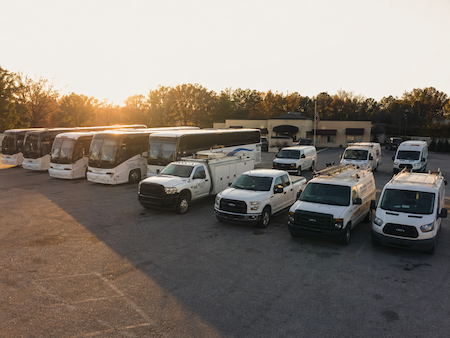
Fleet owners with 10–100+ vehicles who can't justify a full-time in-house Fleet Manager, but feel the cost of not having one.
Operations teams stretched too thin to manage repair decisions, vendor coordination, and fleet health on top of dispatch, drivers, and everything else.
Owners who suspect they're overpaying on maintenance but don't have the technical background — or the time — to prove it.
Companies expanding into new regions without trusted vendor relationships in place, where every new shop is a question mark.
Fleets that already use LBC for compliance — outsourced DQ file management, DOT audit preparation services — and want a single partner managing both sides of the operation.
 This is a fit if
- Maintenance is a top-3 expense line
- You don't have a dedicated Fleet Manager on staff
- You can't always tell if invoices are fair
- Vendor relationships are inconsistent
- You'd hire a Fleet Manager if the math worked
The Cost of Not Having Someone in the Role
Most fleet owners can name their fuel costs to the cent. Insurance to the dollar. Driver wages to the hour. Maintenance? Less so.
Repair invoices come in inconsistently, from multiple vendors, with line items most non-mechanics can't evaluate. Vendor relationships drift without anyone managing them. Software gets bought and never optimized. Fleet health reports become spreadsheets nobody reads. The strategic calls — replace vs. repair, when to walk away from a vendor, which region needs new vendor sourcing — get pushed off because there's no one whose job it is to make them.
The cost isn't one bad invoice. It's the cumulative drift of decisions nobody owns.
For most fleets, the savings on a single quarter of negotiated repairs and vendor accountability cover the cost of the service. The drift, by category- Labor hours quoted higher than flat-rate guides
- Parts marked up well above fair market
- Replacement quoted when rebuild is the standard
- Repeat repairs that should have been warrantied
- Vendor pricing creeping up year over year unchecked
- Maintenance tracking software bought, then orphaned
- Lifecycle decisions pushed off until the truck fails
More on cost discipline: Fleet maintenance costs, Goodyear fleet pricing, the 5 red flags in a fleet repair estimate, and preventative maintenance fundamentals.
Compared to the Alternatives
Four realistic paths when fleet management starts to feel like a real cost center. Honest read on each.
Alternative 1Hire an in-house Fleet Manager
The pitch: Full-time dedicated person, knows the fleet inside-out.
The realistic outcome: $85K–$130K base plus benefits, plus a 4–6 month recruiting cycle, plus the risk they leave inside 24 months. The right hire is rare; the wrong one is expensive. Most operations in the 10–100 vehicle range can't justify the salary line.
Alternative 2Use fleet management software only
The pitch: A modern platform tracks every vehicle, every repair, every cost.
The realistic outcome: Software gives you a place to track. It doesn't review the estimate, push back on the vendor, or interpret the trend report. See DOT compliance automation software for what the right platform does — and what it doesn't do alone.
Alternative 3National fleet management broker
The pitch: Big company, deep vendor relationships, enterprise-grade everything.
The realistic outcome: Built for fleets of 500+. Account rep manages 80 clients with a quarterly check-in. Pricing and account structures don't fit 10–100 vehicle operations — you become a number.
Alternative 4 — what most fleets actually doDo it yourself
The pitch: We've handled it this long. We know our vehicles, our vendors.
The realistic outcome: Maintenance is where most fleets bleed money — quietly. Estimate padding, vendor drift, repeat repairs that should have been warrantied. Invisible because no one in-house has the time or technical depth to catch it. If maintenance specifically is the one open wound, see outsourced fleet maintenance management.
How Outsourced Fleet Management Starts
A short on-ramp, then we go to work.
Step 1Intro call & fleet review
- 15-minute call to understand your operation
- Fleet size, vehicle types, current vendors
- Where you suspect cost is leaking
- What the role needs to cover
Baseline & on-ramp
- Review of recent repair invoices
- Audit of current vendor performance
- Software & documentation setup
- Quick-win savings opportunities flagged
Ongoing engagement
- Daily/weekly/monthly cadence runs
- Real-time estimate review & vendor negotiation
- Monthly fleet health reports
- Strategic calls on the bigger questions
For most fleets, the savings on a single quarter of negotiated repairs and vendor accountability cover the cost of the service.
Book a Free Intro Call Call +1-480-779-4342 Visit the Resource HubFrequently Asked Questions About Outsourced Fleet Management Services
How is this different from hiring an in-house Fleet Manager?
A full-time Fleet Manager runs $85K–$130K base plus benefits, plus a 4–6 month recruiting cycle and real risk they leave inside 24 months. Outsourced fleet management gives you the role at a service-line cost — a dedicated person who knows your fleet, your vendors, and your repair history. For most fleets in the 10–100 vehicle range, the math holds: the savings on negotiated repairs and vendor accountability typically cover the service within the first quarter.
How is this different from fleet management software?
Software gives you a place to track maintenance. It doesn't review your estimates, negotiate with your vendors, or tell you when a $4,200 brake job should have been $2,800. Outsourced fleet management is a service, not a tool — staffed by people with the mechanical background to advocate for your fleet. Software is part of the engagement (we deploy and optimize it), but the role is what you're paying for.
How is this different from a national fleet management broker?
Large national brokers (the Holmans and Elements of the industry) are built for fleets with hundreds or thousands of vehicles, with pricing and account structures to match. Our outsourced fleet management services are built for small-to-mid fleets that need real expertise without enterprise overhead — one Fleet Account Manager per client, not one account rep per 80.
What fleet size does this make sense for?
The sweet spot is fleets of roughly 10 to 100+ vehicles — large enough that maintenance and operations costs materially affect the bottom line, small enough that hiring a full-time in-house Fleet Manager isn't yet justifiable. Smaller fleets sometimes engage us for specific pieces (maintenance management, compliance) without taking the full role.
What does a Fleet Account Manager actually handle day-to-day?
Real-time review of every repair estimate before work starts. Vendor coordination and negotiation when estimates don't reflect fair pricing. Documentation collection and upload to your maintenance system. Monthly fleet health reports surfacing cost trends and vendor performance. Strategic input on replace-vs-repair decisions, lifecycle planning, and expansion-region vendor sourcing. One person; six operational domains; a daily/weekly/monthly cadence that keeps the work moving.
Do I have to use LBC Fleet for compliance to use this service?
No. Outsourced fleet management is offered as a standalone service. That said, many clients use both because a single partner managing driver compliance and vehicle operations creates a cleaner operation overall — see outsourced DQ file management for the compliance side.
How quickly can a Fleet Account Manager start working on our operation?
After the intro call, we typically have a Fleet Account Manager actively reviewing your vendor relationships and recent repair invoices within the first 1–2 weeks. Real-time estimate review begins as soon as we have your vendors looped in. Full monthly cadence kicks in by month two.
How does pricing work?
Pricing is based on fleet size and scope of involvement — whether you want all six operational domains or specific pieces. The simplest way to get an accurate quote is a 15-minute intro call so we can understand your operation. Book the call.
15 minutes to find out if it's a fit
If you're this far down the page, you've probably already wondered if you're overpaying somewhere — or wondered what a real Fleet Manager would change. Let's find out.
Book My Intro Call Or call +1-480-779-4342
Adjacent Reading
Sibling serviceOutsourced Fleet Maintenance Management
The maintenance-only piece of the role, standalone. Estimate review, vendor negotiation, repair documentation.
Benefit-featureFleet Maintenance Costs
How outsourced fleet management actually shows up in your monthly maintenance line — the categories, the patterns, the wins.
Cross-clusterDOT Compliance Automation Software
The software side of the operation — what the platform does, what it doesn't, and why the role still matters.