The FMCSA Is Quietly Building a System to Spot Fleets Running Two DOT Numbers
FMCSA is expanding enforcement against what they call “chameleon carriers.” That means companies that look separate on paper but operate as one business.
Need help reviewing your structure?
Talk to LBC Fleet Compliance
FMCSA has been talking more openly about going after “chameleon carriers.”
That term usually refers to companies that shut down after safety problems and reopen under a new name with the same trucks and drivers.
But something bigger is happening behind the scenes.
The agency is building systems that connect data across inspections, drivers, vehicles, and company registrations. That means regulators can now see patterns they could not see before.
And one of the patterns that shows up quickly is fleets running multiple DOT numbers that function as one operation.
Why This Matters for Passenger Carriers
Passenger transportation has one of the largest insurance gaps in the industry.
| Vehicle Type | Federal Minimum Insurance |
|---|---|
| 9–15 passenger vehicles | $1.5 million |
| 16+ passenger vehicles | $5 million |
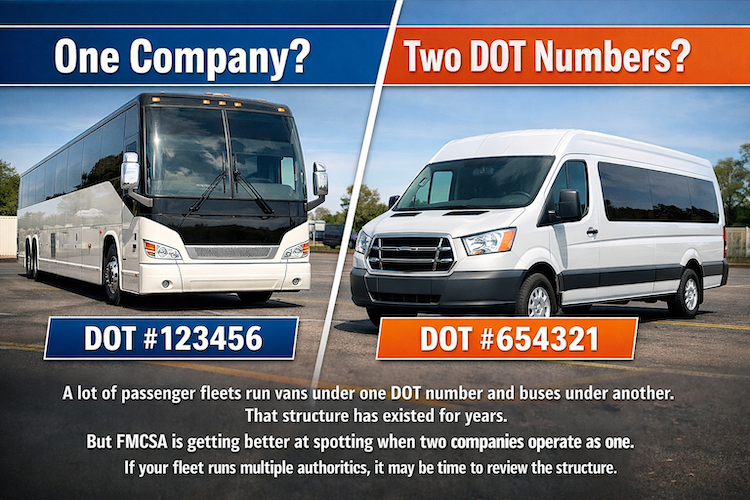
Because of that difference, many fleets structure their businesses like this.
Company A
Runs vans or small shuttles with $1.5M coverage.
Company B
Runs motorcoaches with $5M coverage.
On paper they are separate companies.
In reality they often share:
- dispatch
- drivers
- maintenance
- management
- parking locations
That structure has existed for years.
The difference now is regulators have much better tools to see it.
The Question Investigators Ask
FMCSA investigators do not start with paperwork.
They start with operations.
The question they ask is simple.
Are these companies actually separate carriers?
If the answer is yes, the structure is usually fine.
If the answer is no, regulators may treat the companies as one operation.
Things that raise red flags include:
- drivers working under both DOT numbers
- buses moving between companies
- a single dispatch office controlling both fleets
- the same safety program managing both authorities
When those things overlap, the separation starts to look artificial.
Why the System Is Getting Better at Finding This
Every roadside inspection records a few key things:
- driver
- vehicle VIN
- DOT number
That data creates a timeline.
If the same bus appears under two companies during inspections, investigators see it immediately.
If the same driver shows up under both authorities, they see that too.
Ten years ago connecting those dots took time.
Today the system surfaces those relationships automatically.
Where Fleets Usually Get Exposed
Most operators assume regulators will discover problems during an audit.
In reality the deeper investigations often happen after a crash.
When a serious crash occurs, investigators pull the entire history of that vehicle and driver.
That includes:
- inspection history
- driver employment history
- maintenance records
- dispatch records
- insurance filings
If those records show the operation is shared across multiple companies, the structure can come under heavy scrutiny.
The Bottom Line
FMCSA’s focus on chameleon carriers signals a bigger shift.
Regulators are moving from paperwork enforcement to operational analysis.
The question is no longer just whether the companies look separate.
It is whether they actually operate separately.
For passenger fleets running multiple DOT numbers, that distinction matters.
Frequently Asked Questions
What is a chameleon carrier?
A chameleon carrier is a company that shuts down after safety problems or enforcement action and reopens under a new identity while continuing the same operation. Often the same vehicles, drivers, or management remain involved.
Is it legal to operate multiple DOT numbers?
Yes. A company can operate multiple authorities. The issue is whether those companies truly operate as separate carriers. If the same drivers, dispatch, vehicles, and management systems are shared across both operations, regulators may question the structure.
Why do passenger fleets split companies?
The most common reason is insurance. Smaller passenger vehicles have a lower federal financial responsibility requirement than larger buses. Some fleets separate vans and shuttles from motorcoaches under different companies for that reason.
When does FMCSA investigate affiliated carriers?
Investigations may occur during authority applications, compliance reviews, or after a serious crash. In many cases the deeper review begins when investigators compare driver history, VIN history, dispatch records, and company registration data.
LBC Fleet Compliance helps passenger carriers prepare for audits, insurance reviews, and regulatory compliance.
Schedule a Compliance Review