
Fleet Management for Landscaping Companies
DOT compliance, tool-level leave-behind alerts, GPS asset tracking, license management, and Raven dash cameras for landscaping operators running pickup-plus-trailer combinations that quietly cross 26,001 lbs combined GVWR.
Fleet management for landscaping companies usually starts with a discovery the owner didn't expect. The pickup alone is under 10,001 lbs GVWR — safely out of DOT scope. But the moment a loaded mowing trailer hitches up, the combined gross vehicle weight rating crosses 26,001 lbs and federal regulations apply across the fleet. CDL requirements stack on top. Most landscaping operators have been operating in DOT territory for years without the documentation to match.
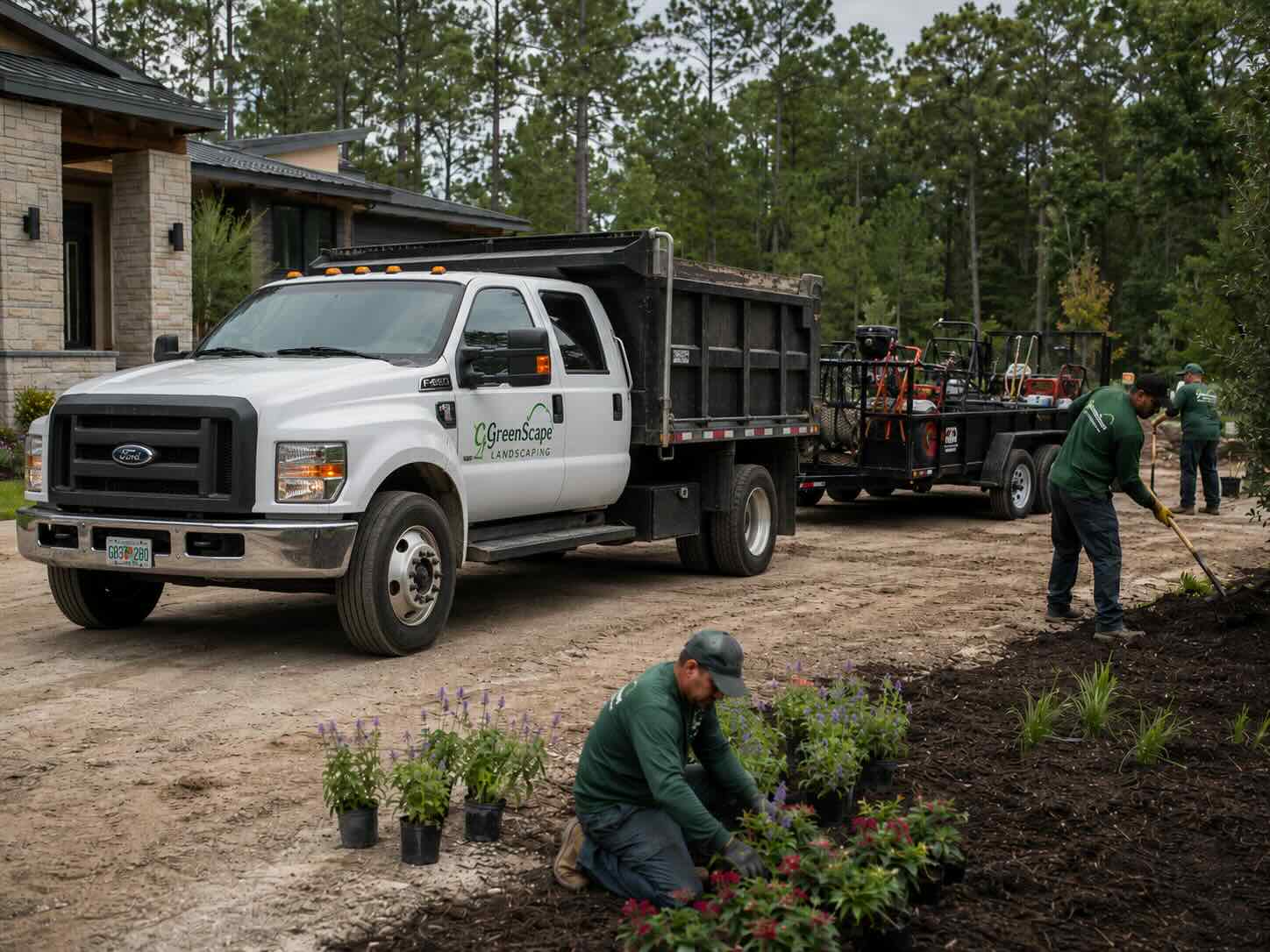
Combined Weight Crosses 26,001 lbs Daily
Loaded mowing and equipment trailers plus a standard pickup easily clear the combined-weight CDL threshold. Most landscaping operations have been running in DOT territory without realizing it. The trucks are CMV-class the moment the hitch is connected.
Tool Tags + Leave-Behind Alerts
Tagged equipment — weed eaters, blowers, trimmers, hedge clippers — checked against truck inventory before the crew leaves a site. If a tool isn't accounted for, the system flags it before the truck drives off. Saves more equipment than theft prevention does, in our experience.
Compliance + Workforce in One File
LBC's DOT Compliance Software tracks DQ files, license expirations, and certifications in one platform. Background checks and MVRs run in parallel — fast onboarding workflows ready before the spring labor surge arrives.
Segments We Work With
Landscaping operations vary by customer type, but the DOT compliance and asset-tracking fundamentals are unified. The day-to-day workflow looks different.
Residential Maintenance
Recurring service routes through homeowner customers and neighborhoods. Background screening matters because crews are on private property weekly. Predictable routes mean better driver behavior data and stronger insurance positioning at renewal.
Commercial Maintenance
HOAs, office parks, retail centers, schools, municipal contracts. Property managers and procurement teams often verify contractor compliance posture before contract renewal — documented programs become competitive advantages on the bid.
Specialty & Design-Build
Tree care, irrigation, hardscape, hydroseeding, installation operations. Specialty licensure (ISA arborist, irrigation contractor, pesticide applicator) needs centralized tracking. Equipment value per truck runs higher than maintenance crews.
DOT Compliance Software
The landscaping engagement runs on LBC's own DOT Compliance Software — DQ files, ELD, DVIR, maintenance documentation, and license tracking across every certification type, in one platform.
Why Fleet Management for Landscaping Companies Looks Different
Like the other trades in our fleet management services by industry lineup, landscaping operations have unified compliance fundamentals but a distinct operational profile. The trailer is the default mode of operation, not the exception. The workforce surges and shrinks seasonally. Equipment moves between job sites all day, often staying behind by accident when crews pack up. Generic fleet software wasn't built for any of that.
- Truck-plus-trailer crosses 26,001 lbs combined GVWR routinely. The pickup alone is under threshold; the loaded mowing trailer pushes the combined weight past CDL territory daily. Federal DOT regulations apply across the fleet — not just the bigger trucks.
- Tool-level tracking with leave-behind alerts. If a weed eater, blower, or trimmer isn't on the truck when it pulls away from a site, the system flags it before the crew leaves the property. Saves more equipment than theft prevention does, in our experience.
- Seasonal labor surge demands fast onboarding workflows. Spring brings a wave of new techs. Background checks, MVRs, and license verification have to run before the truck leaves the yard — not weeks later.
- Specialty licensure across the workforce. Pesticide applicator, ISA Certified Arborist, irrigation contractor, state-specific landscaping contractor licensure. Spreadsheet tracking goes stale fast across a seasonal roster.
- Equipment theft is a constant background reality. Loaded trailers and yards full of mowers are theft targets. GPS tracking on trucks and trailers, plus tool tags at the equipment level, changes the recovery economics materially.
- Customer-facing in residential and HOA work. Background screening isn't optional when crews are on private property weekly. Property managers verify contractor screening as a baseline.
- Multi-state commercial maintenance contracts. Operating across state lines stacks state-specific licensing requirements on top of federal DOT compliance.
Built around how landscaping operations actually run.
Landscaping fleets don't fit a standard template. The trailer is the operation, not the exception. Equipment moves between sites all day and gets left behind more often than it gets stolen. Seasonal labor surges twice a year and slows back down. LBC's DOT Compliance Software was built to handle trailer-combined-weight DOT scenarios with seasonal workforce documentation, and the asset tracking stack — truck GPS, trailer GPS, and tool tags — was built for how landscaping equipment actually moves.
Hardware passes through at vendor-advertised prices. Zero markup. The screening side — background checks and MVR monitoring — runs in parallel. Everything lands in the same compliance file, surfaced through one dashboard.
What Fleet Management for Landscaping Companies Actually Includes
- LBC's DOT Compliance Software platform — DQ files, ELD, DVIR, maintenance documentation. Full breakdown under DOT compliance automation software.
- License tracking across every certification type — pesticide applicator, ISA arborist, irrigation contractor, state-specific landscaping contractor licensure. Centralized with expiration alerts and renewal workflows.
- Driver qualification files for drivers operating combined-weight CMV-class combinations. Cornerstone service: outsourced DQ file management.
- Background checks for residential and HOA-facing crews — pre-hire and ongoing. Tied directly to the compliance file. Cornerstone: background checks.
- MVR monitoring on every driver — feeds directly into insurance carrier renewal pricing. Cornerstone: MVRs and driving records.
- Raven dash camera program — at Raven's advertised prices (zero LBC markup), installation coordination, driver onboarding, footage retrieval workflow.
- GPS tracking on every truck and trailer — recovery economics change dramatically with documented tracking. See telematics.
- Tool tags with leave-behind alerts — tagged equipment inventory checked against the truck before the crew leaves a site. The cheapest piece of asset protection in the stack and usually the highest ROI.
- Mock DOT audits for landscaping operators preparing for procurement scrutiny or just wanting to know where they stand. Cornerstone: mock DOT audit services.
Who This Is For
Three common entry-point patterns for landscaping fleet engagements.
The landscaping owner who just realized they're DOT-regulated
Inspector or insurance carrier mentioned the combined-weight rule. Truck plus loaded trailer crosses 26,001 lbs combined GVWR. Suddenly DQ files, drug testing program enrollment, and HOS records matter. None of those exist yet. If a notice is in hand, start here →
The landscaping operator losing equipment to theft and leave-behinds
A few thousand dollars of equipment walked away last season. Some stolen at jobsites or off open trailers, some forgotten when crews packed up and drove off. No system in place to prevent either pattern, and replacement costs are eating margin.
The landscaping owner running ops through seasonal swings
Spring rush brings in 15 new techs. Background checks, MVRs, license verification stacked up on the office manager's desk. Crews start working before paperwork's done. Insurance auditor will eventually notice. The software to fix this exists — it just hasn't been deployed.
Three Tiers, Pick Where You Are
Landscaping engagements usually start with software and expand as the owner sees the compliance gap and asset-tracking opportunity. The page covers landscaping-specific framing, but the underlying operational layer is the same outsourced fleet management services we run for every vertical.
Tier 1 — Software only. LBC's DOT Compliance Software, self-managed by your team. License tracking, DQ files, ELD, DVIR, maintenance documentation. You drive it, we support it.
Tier 2 — Software + service. Tier 1 plus we run the compliance and asset-protection workflows for you — DQ file building and maintenance, background check coordination, MVR pulls, Raven dash cam program, GPS tracking on trucks and trailers, tool tags configured with leave-behind alerts, mock DOT audits when needed.
Tier 3 — Full integrated fleet operations. Tier 2 plus vendor management, maintenance discipline, fleet health reporting, and a dedicated Fleet Account Manager owning the operational layer day to day.
Tier 1 — Software only
- DOT Compliance Software platform
- License tracking (all certification types)
- Self-managed by your team
- LBC support and training
Tier 2 — adds service
- DQ file building and maintenance
- Background checks coordinated
- MVR monitoring active
- Raven dash cam program
- GPS tracking on trucks and trailers
- Tool tags + leave-behind alerts deployed
- Mock DOT audits
Tier 3 — adds fleet operations
- Vendor and maintenance oversight
- Fleet health reporting
- Day-to-day operational support
- Strategic fleet advisory
Why Landscaping Fleets Need This Stack
After-threshold compliance debt. The combined-weight rule means most landscaping fleets have been DOT-regulated since the day they hitched a trailer. If you've been operating for years without DQ files, drug testing program enrollment, or HOS records, that's compliance debt the auditor will find. Building those records cleanly into one platform is faster than building them across three different spreadsheets and a filing cabinet.
Equipment loss economics. Most landscaping operators lose more equipment to leave-behinds than to direct theft — a weed eater set down behind a hedge, a blower stashed on the side of a house, a hedge clipper resting on a fence post. By the time the crew realizes, the equipment's gone. Tool tags catch the leave-behind before the truck drives off, which is statistically the highest-ROI piece of the asset protection stack. GPS tracking on trucks and trailers handles the direct-theft case. Both together build a layered defense.
Seasonal workforce documentation hygiene. Spring brings 15 new techs through the door inside a few weeks. Background checks, MVRs, license verification — none of that can run as well when the workflow is being built during the surge. We deploy the workflow in late winter so the system handles spring onboarding cleanly. Onboarding 15 techs through a working system is fast; onboarding 15 techs while building the system is chaos.
- Trucks unknowingly operating CMV-class via combined weight
- Equipment left behind at jobsites every season
- Trailers stolen overnight from yards or jobsites
- Expired pesticide applicator licenses nobody tracked
- Seasonal techs working before paperwork clears
- Background checks done once, never refreshed
Our Process
Three phases, run by your dedicated Fleet Account Manager.
Fleet & licensure audit
- Inventory every truck and trailer combination
- Calculate combined-weight scenarios per truck-trailer pair
- Inventory all crew licenses and certifications
- Pull current MVRs and background records
- Inventory mobile equipment for tool tag planning
Software + asset stack deployment
- DOT Compliance Software set up and populated
- License tracking workflows configured
- DQ files built for in-scope drivers
- Raven dash cam rollout coordinated
- GPS tracking on trucks and trailers
- Tool tags deployed with leave-behind alerts
Ongoing compliance & asset protection
- Monthly compliance file review
- License expiration alerts and renewals
- Tool tag inventory updates as equipment turns over
- Quarterly dash cam coaching reviews
- Annual mock DOT audit
- Direct line to your Fleet Account Manager
A 30-minute call is usually enough to figure out which tier fits your fleet.
FAQs about Fleet Management for Landscaping Companies
Do landscaping companies really need DOT compliance?
For most landscaping fleets, yes — and most operators don't realize it. The trick is the combined-weight threshold. A pickup truck alone is usually under 10,001 lbs GVWR, which keeps it out of federal DOT territory. But the moment that pickup hitches a loaded mowing or equipment trailer, the combined gross vehicle weight rating typically crosses 26,001 lbs. At that point, federal DOT regulations apply (DQ files, drug testing, HOS records), and CDL requirements apply for the driver. Most landscaping fleets have been operating in this regulatory zone for years without the documentation to match.
What does the truck-plus-trailer combined weight rule actually mean for my fleet?
Federal rules look at combined gross vehicle weight rating — truck GVWR plus trailer GVWR. A 9,000-lb pickup with a 17,000-lb mowing trailer adds up to a 26,000-lb combined rating, which is just under the 26,001-lb CDL threshold. Most loaded mowing and equipment trailers push the combined number over. The trailers don't need to actually weigh that much when in motion — the rated capacity is what triggers the regulatory category. Once you cross 10,001 lbs combined in interstate commerce, federal DOT regulations apply; once you cross 26,001 lbs combined, CDL requirements apply on top.
How do tool tags prevent equipment being left at job sites?
Each piece of equipment — weed eaters, blowers, trimmers, hedge clippers — gets a tracking tag. The truck knows which tools belong to it. When the crew packs up and the truck begins to leave the site, the system runs an inventory check against the expected tools. If a piece of equipment isn't accounted for on the truck, the system flags it before the crew drives off. The "left it at the customer's house" pattern is statistically more common than direct theft for most landscaping fleets — recovering equipment from the right place is usually free, recovering it from anywhere else costs serious money. Most operators see the tool tag savings before they see the GPS recovery savings.
How does compliance work during the seasonal labor surge?
The compliance workflow has to be running before the surge hits, not built during it. By spring, your background check vendor relationship is active, your MVR monitoring program is in place, your DQ file building workflow is sequenced, and your license verification process is set up. We deploy the workflow in late winter so it's operational when the spring labor wave arrives. Onboarding 15 techs through a working system is fast; onboarding 15 techs while building the system is chaos. Most landscaping operators we work with hit their second spring with a measurable difference in time-to-productive for new hires.
What licenses can your software track for landscape technicians?
Any credential with an expiration date — pesticide applicator (state-issued), ISA Certified Arborist, irrigation contractor licensure, state-specific landscaping contractor licenses, CDL where applicable, and any other certifications your techs hold. Each license gets an expiration alert tied to the technician's file with a renewal workflow. This matters most for operators running specialty work (tree care, irrigation, chemical applications) where customer agreements often require verified credentials before service begins.
How does GPS tracking help with stolen equipment or trailers?
GPS doesn't strictly prevent theft, but it changes the recovery economics. Loaded trailers and trucks left at jobsites or in unsecured yards overnight are theft targets. GPS gives law enforcement a real-time location when something goes missing — recovery rates and timelines improve materially. Insurance carriers often offer discounts for documented GPS programs because expected loss is lower. The per-trailer tracker cost is fractional compared to one stolen Z-turn mower at retail replacement value, and the trailer itself if a full unit is taken.
What about commercial maintenance contracts that cross state lines?
Multi-state landscaping operations stack state-specific licensure on top of federal DOT compliance. Pesticide applicator licensing is state-issued — operating in adjacent states often requires reciprocity registration or separate licensure. Contractor licensure varies by state. Our software tracks state-by-state credential requirements per technician and surfaces missing reciprocity issues before they become a procurement problem during contract bid or renewal.
Still scrolling? Let's map your tier.
Most landscaping engagements start with software and expand from there. A 30-minute call is usually enough to figure out which tier fits and what it'd cost.
Book a 30-Min Call