Updated October 2026. This article replaces a 2019 summary that treated no-defect DVIRs as mandatory for all passenger carriers. FMCSA removed the federal no-defect reporting requirement for passenger-carrying CMVs in 2020. Check the current 49 CFR 396.11, the listed exceptions, and any applicable state or company rules for your operation.
What the federal DVIR rule asks for
For a covered operation, a driver’s written post-trip report identifies the vehicle and lists a defect or deficiency discovered by or reported to the driver that would affect safe operation or cause mechanical breakdown. A driver is not required by §396.11(a)(2)(i) to prepare that report when no such defect or deficiency was discovered or reported. A company may still choose to collect a no-defect checklist as an operating practice; do not label that choice a universal federal mandate.
Before driving, the driver must be satisfied the vehicle is in safe operating condition and, when a prior DVIR is required, review it and acknowledge the repair certification as specified in 49 CFR 396.13. The post-trip report, when required, covers the parts and accessories listed in §396.11. Electronic reports are permitted when they meet the applicable electronic-record rule.
What happens when something is wrong?
Safety or breakdown-related defect: Report it through the carrier’s DVIR and repair process. The carrier must repair a listed defect likely to affect safe operation before requiring or permitting the vehicle to operate, and certify on the DVIR that it was repaired or that repair is unnecessary before the vehicle operates again. The next driver reviews and signs the required report as §396.13 directs.
Non-safety issue: A cosmetic, comfort, or customer-service item can still be worth recording and fixing, but it does not by itself put the vehicle out of service under this DVIR rule. Keep that item visible in the company’s inspection or maintenance workflow without confusing it with a safety defect. Use the applicable rules and the actual condition of the vehicle to make a dispatch decision; do not treat every checkbox as an automatic official out-of-service order.
For a practical record layout and an FMCSA example form, see our DVIR resource. FMCSA says required DVIRs and related repair/review certifications must be retained for three months from the date the written report was prepared. The older LBC paper form linked on the former version of this article used a blanket daily-report instruction; it is not presented here as current federal guidance.
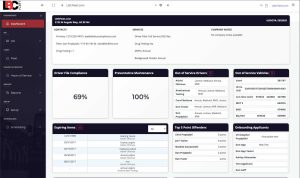
Comparing software for DVIR follow-up? Our DOT compliance software overview lists DVIR and maintenance as workflows to evaluate in a live demo. Ask to see how an inspection issue reaches the right person, how repair is recorded, and who decides the vehicle can return to service in your configuration. The overview is not proof that every step is available in every account.