Updated October 2026. DOT compliance is not one checklist that applies to every transportation business. The right starting point is to identify the vehicles, drivers, cargo or passengers, routes, and type of operation, then determine which federal and state rules apply. FMCSA’s Motor Carrier Safety Planner is a useful federal starting point; it is not a substitute for the regulations.
Start with applicability, not assumptions
Hours-of-service, driver-qualification, and vehicle-maintenance duties depend on the operation and the rule involved. ELD use is a separate question from whether a driver must keep a record of duty status. For example, FMCSA says drivers who qualify for the short-haul timecard exception do not have to keep RODS or use an ELD for those qualifying days; they still need the required time records. Review FMCSA’s ELD explanation and the exact conditions before changing a logging process.
One important correction to the original 2023 version of this article: federal DOT drug and alcohol testing is not mandatory for every transportation company. FMCSA generally applies its Part 382 testing rules to drivers operating commercial motor vehicles that require a CDL under federal rules. A company may have other obligations under state law, contracts, or its own policy, but those are not the same as the federal Part 382 mandate. See FMCSA’s Who do I test? guidance.
Turn the rule map into a working process
- List each vehicle and driver role; identify which rules apply to each operation.
- Assign an owner for driver files, HOS records, vehicle inspections and repairs, and testing records where required.
- Sample actual records and follow a defect, missing document, or missed follow-up through to resolution.
- Record open questions and get a qualified answer before treating an exception as permission to stop keeping records.
That process can help a carrier find gaps earlier and show what still needs attention. It does not guarantee an audit result or remove the carrier’s responsibility for compliance.
Choose the next tool for the actual problem
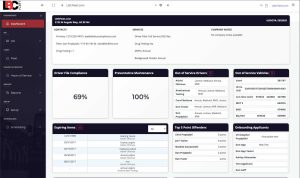
If records and follow-up are the problem, review LBC Fleet’s DOT compliance software overview and ask for a demonstration of the specific records and workflow your operation needs. Software can support a process; its presence alone does not establish compliance.
If repair decisions, maintenance scheduling, vendor coordination, or fleet reporting are the bottleneck, see the separate outsourced fleet management service. That is an operations service, not a substitute for determining which DOT rules apply to your drivers and vehicles.