Hiring a compliance partner should make the work clearer, not make your oversight disappear. Start with a plain question: which tasks will this provider handle, and which decisions and records still belong to your company? A polished sales pitch is not an answer.
Ask about your kind of operation
Ask for experience with the rules that apply to your fleet and the work your drivers actually do. A passenger carrier should ask about passenger operations, not assume a trucking-only workflow fits. Have the provider walk through a sample onboarding file, an expiring document, an inspection defect, and an audit request. Who notices the problem, who contacts your team, and who records the resolution?
Know who owns the drug-testing handoff
If your operation is subject to DOT drug and alcohol testing rules, ask what the service agent performs, how qualifications are checked, who serves as your designated employer representative (DER), and how your company can retrieve its records. DOT’s 49 CFR § 40.15 guidance says an employer may use a service agent but remains responsible for compliance; a service agent cannot act as the employer’s DER. Ask for the handoff in writing rather than assuming a vendor has taken over every obligation.
Test software with a real workflow
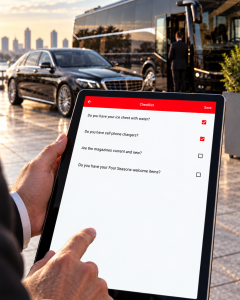
For an ELD, check the exact device model against FMCSA’s registered-device list and revoked-device list. Listed ELDs are manufacturer self-certified; FMCSA does not endorse them. Then have a driver and an administrator demonstrate log review, corrections, certification, and transfer. For vehicle inspections, test how a reported defect reaches the right person and how the assessment and repair are recorded. A screen that collects a checkbox is not the entire follow-through.
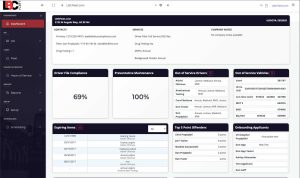
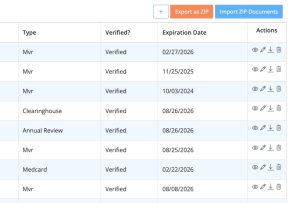
If you are evaluating LBC Fleet’s DOT compliance software, bring a driver-file date and a sample document to the demo. Ask to see the request, proof upload, manager review, and record access in your proposed setup. Confirm separately whether any ELD or DVIR workflow you need is available and included; a dashboard picture alone does not prove it.
Put the scope on one page
- List each task, the owner, the backup contact, and the expected turnaround.
- Confirm where records live, who can retrieve them, and what happens if you leave the provider.
- Ask how rule changes, exceptions, and unresolved issues are communicated.
- Request a demonstration using your actual passenger, vehicle, and driver workflows before committing.
Good help is specific and checkable. If you want to compare those questions with our administrative offerings, see LBC Fleet’s compliance and driver-support services. Ask us which tasks fit your operation and which stay with your team.