Passenger-carrier DVIRs: what changed and what still matters
A clean vehicle no longer needs a federal no-defect DVIR just because it carried passengers. That is the 2020 change. It did not remove the inspection and defect-reporting responsibilities that apply to a passenger carrier subject to 49 CFR Part 396.
What changed in 2020?
FMCSA's passenger-carrier no-defect DVIR rule took effect September 17, 2020. Drivers covered by the rule no longer have to prepare a DVIR when no defect or deficiency was discovered or reported to them. A carrier can still choose to collect no-defect reports as a company practice. Check any applicable state rules and the scope of your own operation before changing a policy.
The practical distinction is simple: no reportable defect does not mean no vehicle check. FMCSA said the rule did not change pre- and post-trip inspection responsibilities.
When a driver finds a defect
For a carrier subject to 49 CFR 396.11, a DVIR is required when a defect or deficiency discovered by or reported to the driver would affect safe operation or result in mechanical breakdown. The driver identifies the vehicle, describes the issue and signs the report. If more than one vehicle was operated that day, the report requirement applies to each vehicle with a reportable defect.
The carrier or its agent must address a listed defect likely to affect safe operation before the vehicle is used again, and certify on the report that the defect was repaired or that repair was unnecessary. Before driving, the next driver must be satisfied the vehicle is safe, review the required DVIR, and sign to acknowledge the review and repair certification under 49 CFR 396.13. The federal DVIR record, repair certification and reviewing driver's certification are kept for three months from the initial report. A longer company retention policy or another applicable record rule may also matter.
Do not confuse a non-safety service item with an out-of-service condition. A missing water bottle, charger or welcome item can be captured on a customizable company checklist without automatically taking a vehicle out of service. A safety-related defect needs the separate repair and release decision the rules require.
Paper or electronic?
Either can work. Effective March 23, 2026, FMCSA expressly clarified that DVIRs may be created and maintained electronically under 49 CFR 390.32. Electronic reporting was already permitted; the update made that permission explicit in 396.11 and 396.13. It did not require carriers to buy an app, and using an app does not by itself prove every inspection, repair or signature happened.
Choose a process that lets the right people see an open defect, document the repair decision and retrieve the record. Test the actual software workflow before promising that it blocks dispatch or captures every required acknowledgment.
Three questions for your operation
- When a driver reports a safety-related defect, who receives it and who owns the repair or no-repair certification?
- How does the next driver find the required report and acknowledge it before using the vehicle?
- Can you retrieve the report and both certifications when asked?
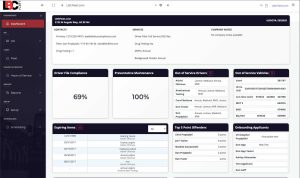
If you need a starting point, browse our DOT checklists and resources. That is a resource library, not an audit service. For someone to review your current process with you, see how a mock DOT audit works. You can also explore the compliance software and ask us to demonstrate the DVIR workflow for your fleet.